
Home
The Southeast Asia regional group is formed of staff across all faculties in the University of Leeds. We work with colleagues in all of the Association of Southeast Asian Nations member states: Brunei Darussalam, Cambodia, Indonesia, Laos, Malaysia, Myanmar, Philippines, Singapore, Thailand and Vietnam, as well as Timor-Leste. You can find out more about the ASEAN countries here, or learn about the University's current research projects here.
Meet our Experts
Research Projects
Thai Studies
Join ASEAS UK
Environmental project in Central Kalimantan
 Researchers from the University of Leeds have been working with global partners across the UK and Indonesia to understand the causes of drought and peatland fires in Central Kalimantan. The KaLi project aims to identify actions which can reduce the risk of fires, and build resilience in the most affected communities.
Led by a consortium of five UK and three Indonesian universities, the project also involves working with local communities, village heads, women’s groups, young people and farmers. You can find out more about the project on their website or read the full article for more information.
University of Leeds and University of Indonesia Deliver New COIL Module
Psychology students from Leeds and Indonesia have worked together to take a unique look at how their cultures influence the way the subject is taught.
The collaborative COIL module came from a relationship established by Dr Madeleine Pownall and Dr Richard Harris, both Associate Professors in the School of Psychology in Leeds. In 2023 they visited Indonesia to deliver a workshop around psychological education.
From there, the partnership grew and, thanks to a £25,000 British Council Grant focusing on transnational education, they were able to deliver their first COIL module in partnership with Universitas Indonesia this year.

COIL modules involve students from institutions in different countries collaborating on a learning programme or task. The University of Leeds offers COIL modules across a range of disciplines, from languages to sciences, business to design, and with universities across the world including India, Africa, China, Japan, America and Mexico.
CDP Guest Lecture: Professor Mark R. Thompson (City University of Hong Kong
CDP Lunchtime Guest Lecture
Title: Is Moderation Always Best? Opposition Pushback against Democratic Backsliding in Southeast Asia
Speaker: Professor Mark R. Thompson, City University of Hong Kong
Date: Tuesday, 12 May 2026
Time: 12:00-13:00 (lunch provided)
Location: Baines Wing SR 3.06
https://cdp.leeds.ac.uk/events/cdp-guest-lecture-professor-mark-r-thompson-city-university-of-hong-kong/
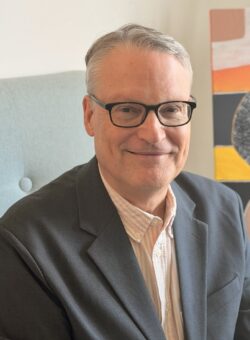 Democratic Backsliding in Southeast Asia
An influential argument in the pushback-against-backsliding literature is that radicalized opposition risks strengthening a shift towards authoritarianism. It is said to be safer to adopt moderate goals and institutional strategies within a democratic framework, providing fewer excuses for a crackdown while buying time to defeat autocrats. Yet evidence from six Southeast Asian countries undergoing democratic backsliding which still have (or recently had) semi-competitive elections and active civil societies demonstrates largely the inverse of this moderation hypothesis. While militant social movements with “radicalized” demands in Southeast Asia have sometimes been used to justify subjugation, this argument is circular as radicalization has often been the consequence of regime repression not its cause. The repression-radicalization nexus has created synergies between political parties and social movements - as seen in the “revolutionary” opposition against the recent coup in Myanmar, monarchy-critical student protests in Thailand, and the Bersih election reform rallies in Malaysia. By contrast, moderate opposition against rulers employing targeted or calibrated repression in Indonesia, the Philippines, and Singapore has involved more limited cooperation between parties and activists, resulting in weaker electoral as well as civil societal pushback and allowing regimes to claim to be ruling “democratically” despite autocratization. Although regional comparison cannot claim global generalizability, at a minimum it points to a conceptual “travelling problem”, suggesting the dynamics of opposition against autocratization need to be rethought. Recent events from the U.S. state of Minnesota to Bangladesh add plausibility to the claim that radicalization following repression, not moderation in order to avoid government crackdowns leads to stronger pushback against backsliding.
Mark R. Thompson is chair professor in the Department of Public and International Affairs at the City University of Hong Kong where he was director of the Southeast Asia Research Centre (SEARC) from 2011-2025. He is among the world’s top 2% most-cited scientists in the subfield of “Political Science & Public Administration” according to the 2024 Stanford/Elsevier annual report. His research - which has been featured in the popular media and academic blogs - includes 12 books as author or editor, most recently Towards Inclusive Social Policies: Southeast Asia after the Pandemic (Bristol, 2025, co-author), The Philippines: From “People Power” to Democratic Backsliding (Cambridge, 2023), Presidentialism and Democracy in Southeast and East Asia (co-editor, Routledge, 2022), and China’s “Singapore Model” and Authoritarian Learning (co-editor, Routledge, 2020). He has received external grants worth over one million USD, including five as PI from the Hong Kong Research Grants Council. A past president of the Asian Political and International Studies Association and the Hong Kong Political Science Association, he was Lee Kong Chian Distinguished Fellow for Southeast Asian Studies at the National University of Singapore (2008) and Stanford University (2009) as well as a visiting fellow at the Center for Southeast Asian Studies (CSEAS), Kyoto University in winter/spring 2024.
Cheney Fellowship Awardee
 The Cheney fellowship brings highly talented and creative academics to Leeds to advance their research and build enduring collaborations.
We are delighted to introduce the awardee of this year's Cheney Fellowship, Dr Yit Siew Chin, Associate Professor in the Department of Nutrition at Universiti Putra Malaysia. She will be hosted by the School of Food Science and Nutrition from 2024 to 2026 to continue her research on child nutrition, obesity and health. You can read more about her research here.
Contact Us
You can find contact details for individual experts on our People page, or you can contact us here:
Chair of the Southeast Asia Regional Group: Adam Tyson [email protected]